
Introduction
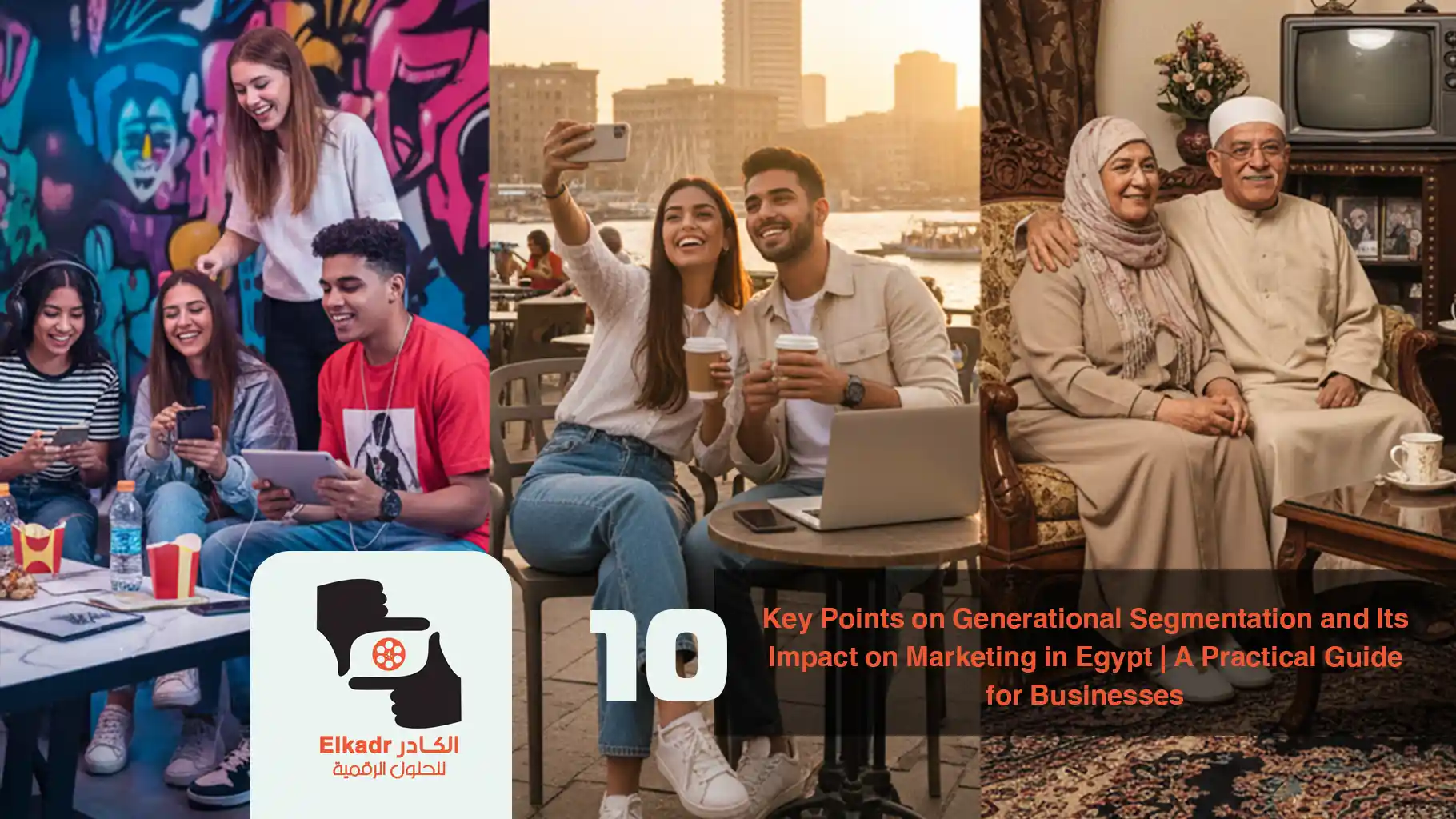
The concept of generational segmentation is no longer just a set of buzzwords used in articles or on social media. It has become a practical analytical tool for understanding human behavior—especially in marketing and business. Any company today trying to sell a product or service without understanding the generation it is addressing is most likely wasting its budget in the wrong direction. The problem is often not the product itself, but how it is presented, the language used, the timing, and the platform through which the message is delivered.
Generational classification emerged as a way to explain why the same message resonates deeply with one group while passing unnoticed by another. Why one generation trusts television advertising while another perceives it as cheap performance. Why some generations associate purchasing with values and stances, while others buy for experience or trend alone.
The issue, however, is that most commonly used generational frameworks were developed within a Western context—shaped by historical events and social experiences very different from those in Egypt. This has created a significant gap between theoretical analysis and the real dynamics of the Egyptian market. Hence the need to first understand global generational models, then reinterpret them through an Egyptian lens—identifying what applies, what differs, and why this distinction is crucial for anyone working in marketing or business.
Point One: Who originally defined generations, and why did the concept emerge?
Generational classification did not originate from marketing departments or advertising agencies. Its roots lie in sociology. The first academic articulation came from German sociologist Karl Mannheim in the 1920s. Mannheim argued that people born within the same historical period and exposed to the same major events develop a shared consciousness and similar ways of thinking, regardless of social class.
Later, the concept was expanded by major American research institutions such as Pew Research Center, the U.S. Census Bureau, and the Strauss–Howe generational theory. These frameworks were used to analyze transformations in American society—work, politics, consumption, and culture.
The objective was never to box people into rigid categories, but to answer fundamental questions:
- Why does one generation trust government institutions while another distrusts them?
- Why does one generation seek lifetime employment while another changes jobs every two years?
- Why does one generation respond to traditional advertising while another ignores it entirely?
Over time, these classifications moved from academic research into business practice, becoming a core marketing tool—because understanding a generation means understanding how it thinks, decides, and responds to messaging.
Point Two: How were the official global generational divisions formed?
Well-known global labels such as Baby Boomers, Gen X, Millennials, and Gen Z were not created arbitrarily. They were built around major historical events that directly shaped Western societies, particularly in the U.S. and Europe.
Researchers did not simply divide people by birth years. Instead, they examined pivotal moments that altered behavior and mindset.
- Baby Boomers, for example, were born after World War II, during a period of strong economic growth, job stability, and high trust in institutions—reflected in their loyalty and long-term commitment.
- Gen X experienced economic uncertainty, the breakdown of traditional family models, and the gradual introduction of technology, making them more pragmatic and skeptical.
- Millennials matured alongside the internet and early digital globalization, prioritizing experience and meaning over salary alone.
- Gen Z was born into an accelerated world dominated by social media, instant content, and information overload—resulting in higher critical thinking but lower patience.
-
Generation Alpha was born into a screen-first world—where tablets precede pens and content precedes reading. Learning is visual, attention spans are shorter, and interaction is fundamentally different. With AI becoming embedded in daily life, early signs of an emerging, yet-unnamed generation are already visible—one raised alongside algorithms and intelligent assistants, potentially redefining work, learning, and consumption more profoundly than any before.
In essence, global generational theory rests on a simple principle:
Major events create generational differences—not merely birth years.
Point Three: Why copying global generational models into Egypt creates problems
One of the biggest mistakes companies make in Egypt is applying global generational frameworks verbatim without considering local context. This often leads to flawed analysis, weaker marketing, and misplaced decisions.
Egypt did not experience the same formative events as Western societies. World War II did not trigger economic prosperity here, the internet arrived later, and technology spread differently. A person born in Egypt in 1985 does not share the same mindset, behavior, or consumption patterns as someone born in the U.S. that same year.
Additional local factors shape Egyptian generations: economic instability, the role of the state, political events, media influence, and extended family structures. All of these affect decision-making, risk tolerance, and brand trust.
Therefore, labeling someone as “Gen Z” and assuming they behave like their American counterpart often results in misjudgment. Global models should be treated as general frameworks—then reinterpreted through lived Egyptian experience to produce realistic, market-relevant insights.
Point Four: How local Egyptian events created distinct generational patterns
In Egypt, generations were shaped not only by birth years but by transformational moments that altered daily life and awareness.
- The arrival of satellite television in the 1990s created a “Satellite Generation”—visually oriented, culturally exposed, yet pre-digital.
- The mobile phone reshaped time and communication, creating a faster, more flexible “Mobile Generation.”
- The internet and Facebook produced a critical, comparative generation accustomed to discussion rather than passive reception.
- Finally, TikTok and short-form content produced a generation with shorter focus but faster influence.
Each technological or social leap produced a behavioral generation, regardless of overlapping ages—an essential insight for modern marketing.
Point Five: Where global and Egyptian generations overlap—and where they diverge
Globally and locally, generations share surface traits but differ in depth and behavior. Millennials in both contexts value technology and meaning—but Egyptian Millennials are more price-sensitive. Egyptian Gen Z shares speed and skepticism but carries stronger socio-political awareness shaped by local events.
Global models offer outlines; Egyptian reality adds layers. Treating Egyptian consumers as replicas of Western generations significantly weakens marketing impact.
Point Six: Generational traits in Egypt and their effect on buying behavior
Each Egyptian generation has a distinct consumer temperament:
Older generations prioritize durability and long-term value.
Satellite/Mobile generations embrace experimentation but show moderate loyalty.
Facebook generations research, compare, and influence others.
TikTok generations decide instantly, driven by trends, with weak loyalty.
Point Seven: Strengths and weaknesses of each generation from a business perspective
Every generation represents both opportunity and risk. Stability, scale, influence, or virality—each comes with trade-offs that businesses must navigate carefully.
Point Eight: How marketing strategies shift across generations in Egypt
One-size-fits-all marketing fails. Each generation demands a tailored approach—platform, tone, content length, and proof all vary dramatically.
Point Nine: Egyptian market examples of generational success and failure
From boycott-era brand recoveries to delivery-app trust collapses, Egyptian examples consistently show that misunderstanding generations—not product quality—is the root cause of failure.
Point Ten: Why generational understanding is now a strategic necessity
Generational insight determines messaging, platforms, crisis management, and long-term growth. Misreading generations is costly.
Conclusion: Why understanding generations is the key to business success in Egypt
Generational segmentation is not categorization—it is human understanding. Egypt reshaped global generations through its own history, economy, and culture. Brands that grasp this reality build trust, longevity, and relevance.
Those who understand people correctly, the market opens its doors to them.
Leave A Comment